
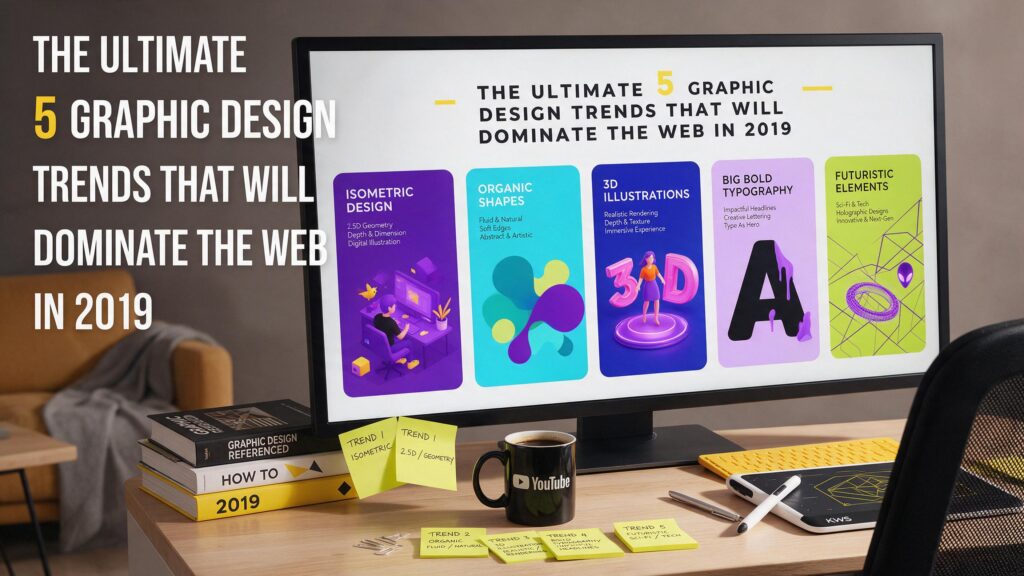
Believe it or not, we’re already rounding the first base in the great baseball game that is the calendar year, and 2019 has some exciting graphic design trends on the horizon. So if you’re a web designer looking to update the look of your site or sites to stay cutting edge and on trend, here are five trends to keep in mind.
A 2026 update: Seven years later, that first base metaphor has aged into extra innings, and the game itself has changed more than anyone writing in 2019 could have predicted. Generative AI now sits inside nearly every designer’s toolkit. Figma’s 2026 State of the Designer report surveyed more than 900 working designers. The report found that roughly nine in ten designers use generative AI weekly. That figure rose sharply from just over half in 2025.
Clutch research shows that about half of consumers still view website design as crucial to brand perception.
The tools behind web design have changed, but the importance of a strong visual identity remains.
Below, we revisit our five original 2019 trends and compare them with 2025-2026 developments.
The “Made By Hand” Look
Ever since the ascendancy of Etsy type of websites and other sites that focus on handmade goods, this look has been in favor, and this year will likely be no different. But the “handmade” look doesn’t have to actually be crafted by hand, of course. Software like Adobe Illustrator lets you create hand-drawn styles digitally. You can recreate this aesthetic across an entire website. This approach can give your site a distinctive and authentic visual style.
The handmade look also encapsulates eclecticism, with flaws built into the design that make the overall product appear completely unique. Asymmetrical features and organic textures make “made by hand” an endearing, attractive trend to work with, especially when creating websites and content.
Open Composition
Open composition design moves beyond traditional “closed” web design. It ignores borders and uses whitespace to suggest a larger, unseen composition. Artists already embrace this style as a major trend. Web designers now adapt the approach for modern websites. Often eclectic and even apparently random, this style is immediately engaging, demanding the full attention of everyone who sees it. While it may not be the best choice for a more traditional website, this design trend could be stunning for a site that calls for uniqueness and quirk.
Three Dimensional Design
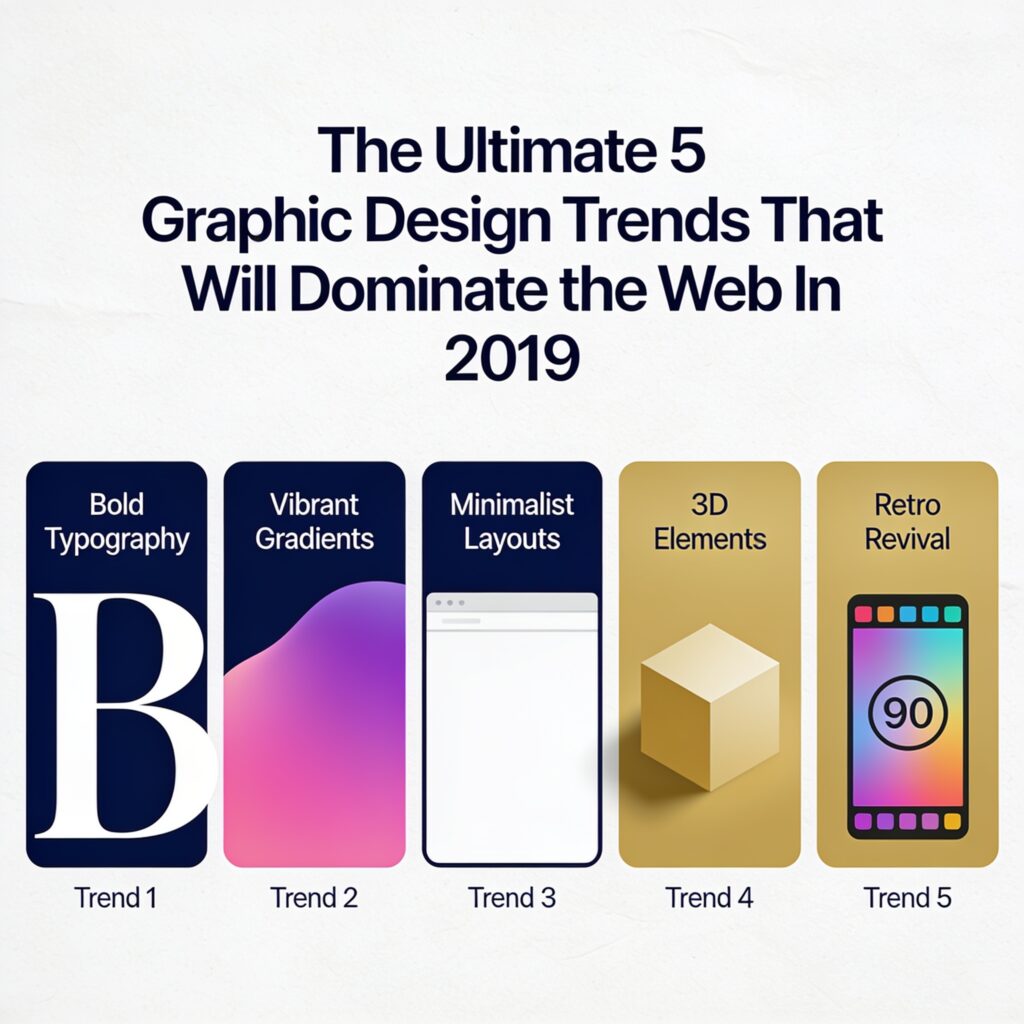
3D may seem like it has hit its peak and descended the other side, especially after the resurgence of 3D movies some time back. But as far as graphic design, it’s on the short list to become a big player in trends this year.
3D design can create engaging augmented reality and virtual reality experiences. AR and VR have gained significant attention in recent years. This popularity may help drive continued interest in 3D design.
3D design can be used in web design to help to create an immediate, immersive experience for the viewer. It can also be employed in the design of avatars, sponsors, and AI interfaces.
Isometric Design
Roughly speaking, isometric design is about drawing a three dimensional object in only two dimensions, using careful colorization to make the design look like it is 3D. This keeps the design simple and easily rendered, but also gives it far more depth than a simple flat design. This is a useful trend for web design, as it follows the popular 3D wave, but saves loading and rendering time and space, since it really is a 2D design. These are created with careful attention to line and color in graphic designs to create an impact on the viewer. Isometric designs are ideal for use as main features on web pages, as well as for icons and avatars.
Micro Movements
Every web designer wants a way to render their web design more interactive, more intriguing, more engaging. Well, micro movements may be just the thing. It isn’t unusual to see photo slides as a main feature of a web page, but what about tweaking that movement down? Creating a graphic that changes every now and then in subtle ways keeps the viewer guessing and watching. Micro movements may be incorporated into everything from the web page menu to background images to hover text, and can increase the interest wherever they are added.
On Trend Web Design
New design trends emerge every year, while others quickly fade away. These five trends remain popular and actively engage your audience. They also encourage visitors to spend more time exploring your website.
FAQ
Q: Are the original 2019 graphic design trends hand drawn look, open composition, 3D, isometric, and micro movements still relevant in 2026? A: Yes. All five evolved rather than disappeared. The hand drawn aesthetic became the “imperfect by design” reaction to AI generated visuals, open composition became anti grid and bento block layouts, 3D moved from novelty to a documented conversion driver, isometric design remains a top five trend backed by comprehension research, and micro movements matured into the well studied discipline of micro interactions.
Q: What replaced flat, minimalist web design in 2026? A: Designers are now blending two parallel movements: highly polished, AI assisted minimalism on one side, and deliberately imperfect, textured, hand touched design on the other. Both are direct responses to the flood of AI generated content now online, just pulling in opposite emotional directions.
Q: Does 3D web design actually improve conversion rates? A: According to Shopify’s platform wide data, products presented with interactive 3D content generate roughly double the conversion rate and notably fewer returns compared with static product images, and 2026 research from WPRiders found AR previews can lift conversion by more than 40 percent in high consideration purchase categories.
Q: Is isometric design still worth using in 2026? A: Yes. Industry tracking cited by Depositphotos still ranks isometric style among the top five web design trends, and research suggests roughly 80 percent of users comprehend complex information more easily through isometric illustration than through flat graphics, which is why it remains popular for icons, dashboards, and infographics.
Q: What are micro interactions and why do they matter for SEO and UX? A: Micro interactions are small trigger and feedback moments, like a button changing on hover or a checkmark confirming a valid form field. They matter because they reduce user errors, increase time on page and engagement, and signal a trustworthy, professionally built site, all factors that influence conversion rates and how favorably search engines and AI answer engines evaluate a page’s overall user experience.
Q: How has AI changed the graphic design process since 2019? A: Generative AI is now a daily tool for most professional designers, not a novelty. Figma’s 2026 State of the Designer report found that roughly nine in ten designers now use generative AI weekly, up sharply from about half just a year earlier. Tools like Adobe Firefly, Midjourney, and Figma AI are commonly used for concepting, background generation, and rapid iteration, while final creative judgment, typography, and client strategy remain firmly human led.
Q: What’s the biggest overall shift in web design between 2019 and 2026? A: The biggest shift is that visual trends are no longer just aesthetic choices, they’re measurable business decisions. Where the 2019 article discussed these five trends primarily in terms of look and engagement, the 2025-2026 data ties each one directly to conversion rate, return rate, user comprehension and satisfaction metrics that marketing and product teams now track explicitly.
Conclusion
Each year sees a new crop of trends to be aware of, and each year some trends fall by the wayside, but as this refresh shows, none of our original 2019 picks actually fell away. Instead, all five became core pillars of professional web design in 2025 and 2026. Designers use hand drawn elements to counter AI driven visual sameness. They use open, anti grid layouts to strengthen visual storytelling. WebGL powered 3D and AR can also drive measurable revenue. Isometric illustrations help users understand complex information more easily. Micro interactions remain key tools for modern UX and conversion optimization.
These five trends offer more than short-term popularity. They actively engage audiences and encourage deeper interaction with your website. That remains true for 2026’s AI-assisted tools, just as it did for 2019’s Illustrator brushes.
If you plan a website refresh, focus on proven design directions rather than chasing every new trend. Choose the approach that best fits your brand and audience. Consider hand crafted textures, open composition, dimensional design, isometric clarity, or thoughtful micro interactions. Use today’s AI assisted and WebGL enabled tools to bring your chosen direction to life. Reach out to the Denver Digital team if you’d like help auditing your current site against these 2026 benchmarks and building a design refresh grounded in both current aesthetics and current data.
We updated this article on September 21, 2026.