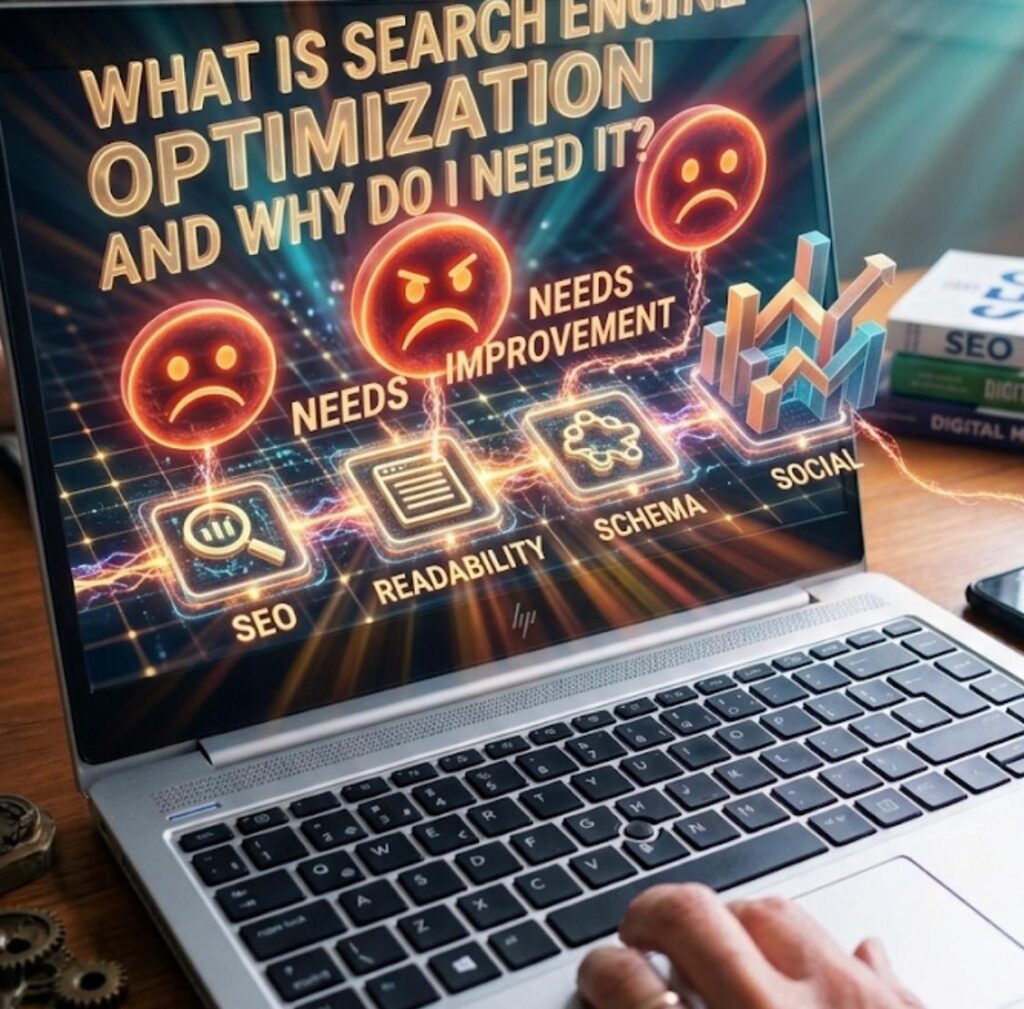
As a manager or business owner, you likely understand that your website is one of the most important components of your marketing plan and that’s even truer today than it was a few years ago. In today’s fast paced world, most business searching is done online, and the balance of power has tipped decisively toward mobile. Google’s own market data shows mobile now accounts for roughly 90% of all Google search volume worldwide, compared to about 79% on desktop, with Google holding over 89% of the global search engine market and processing well over 16 billion searches every single day. In other words, “a growing number of searches happening on smartphones” isn’t a trend anymore, it’s the default behavior of nearly every customer who might walk through your door.
It doesn’t matter if you have the best product at the best price, or if your restaurant has the best location and the best food. If your customers aren’t able to find you, on Google, on Google Maps, in an AI Overview, or inside a ChatGPT or Gemini answer, you’re losing out on tens of thousands of dollars. And the stakes of “findability” have only gotten higher: it’s no longer just about ranking in ten blue links. In 2026, a meaningful share of searches never produce a click at all, because the answer appears directly on the results page or inside an AI generated summary.
How can I help my customers find my business?
With most searches starting online, the most important thing you can do involves making your website easy for your customers and for search engines to find. Ultimately, this means your business will want to rank on page 1 of a Google search. If you manage a business but your listing doesn’t show up until page 10 of an online query, your customers still won’t be able to find you, no matter how good your product is.
Data suggests that most internet users never make it past page three of a search engine’s results list and that behavior has only intensified. If you’re not on the coveted page 1, at the very least, you should be on page 2. Anything beyond that, well, you’re losing money.
But “page 1” now means something more complicated than it did in 2019. Google increasingly answers informational queries directly inside AI Overviews before showing the traditional results list. By January 2026, AI Overviews were appearing in roughly a quarter of all U.S. searches, with informational queries seeing the highest exposure, and some broader industry analyses put AI Overview coverage above 30% of all Google searches by 2026, nearly all of it concentrated on informational rather than transactional queries.
This shift affects click through rates on traditional listings. It also creates a new opportunity for brands. Brands cited in an AI Overview can receive roughly twice as many organic clicks per impression. This compares with brands that lack citations for the same query. In practice, this means visibility today isn’t just about your blue link position, it’s about whether your content is clear, well sourced, and structured enough for an AI system to quote you as the answer.
How a blog can help

The search engine crawlers are always changing, which means that the strategies you used to help your website rank well in the past, might no longer work. In some cases, what worked well in 2011 will hurt your ranking today. The most obvious example we can give you relates to keyword usage. In the past, the search engine crawlers favored websites that used a lot of keywords and keyword phrases. Today, this practice will do far more harm than good.
Yet there are some things that worked in days past that still work well today. Adding new, fresh, relevant content is one of those things. No one is suggesting you should constantly add new sections to your website. Not only would this make your website a disaster to navigate, it would make it visually busy, which will destroy your dwell rate (we’ll talk more about dwell rate in a later post.)
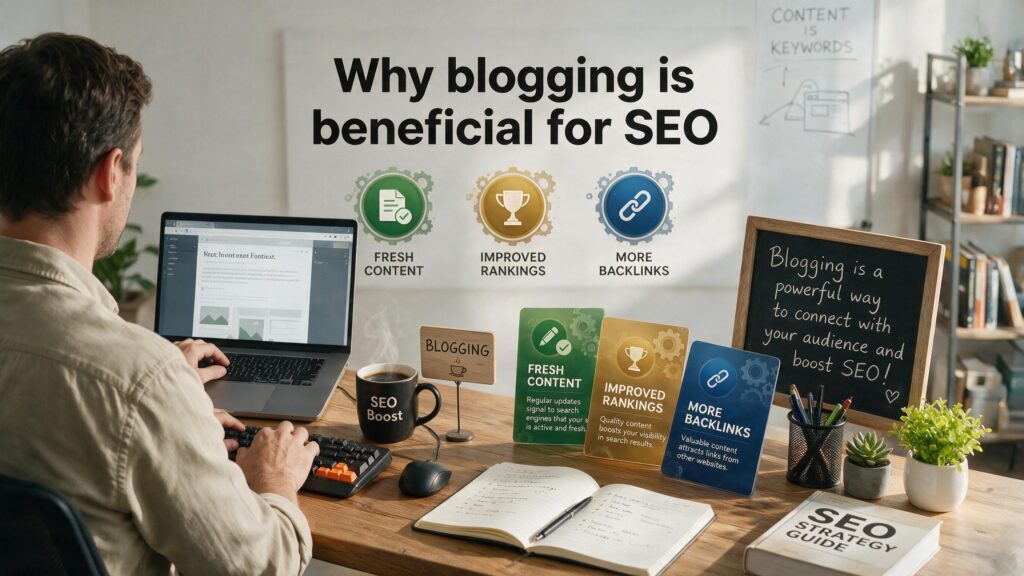
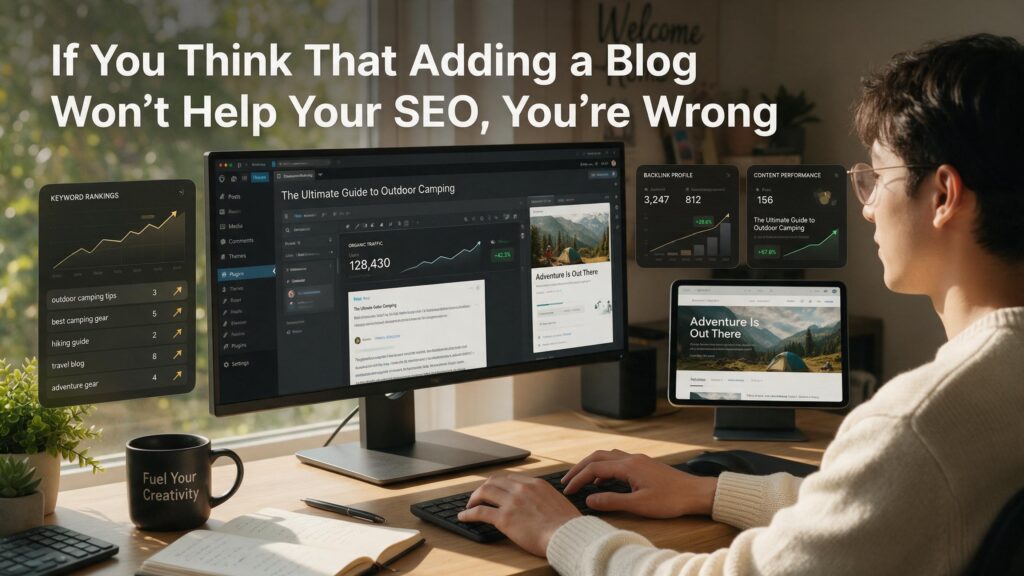
Experts agree the best way to add fresh, meaningful content is to start a blog. A blog will help keep your website updated (which the crawlers like), it will allow you to continue to add targeted keywords (in such a way that helps, and not harms your ranking) and it will give your customers something to read (which will help improve your dwell rate.)
Remember, blog content should be relevant, informative and well written. If the content is terrible or it’s filled with misspellings, you’re not going to be doing yourself any favors.
Experts you can trust
If you have further questions about SEO, how to improve your website’s ranking, and how a blog can help you achieve that goal in a search landscape now shaped by Google, Bing, AI Overviews, ChatGPT Search, Perplexity, and Gemini, contact Denver Digital today to speak with a digital marketing expert you can trust. The fundamentals your grandparents’ marketing team understood be helpful, be honest, be findable haven’t changed. What’s changed is who, and what, is doing the finding. A blog built on real expertise and a smart, modern SEO strategy remains one of the most reliable ways to make sure it’s your business, not your competitor’s, that gets found and cited first.
FAQ
Does blogging still help SEO in 2026?
Yes. Regularly publishing well researched, expert content continues to signal freshness and relevance to Google’s ranking systems, and it increases your chances of being cited as a source inside AI Overviews and AI powered search tools like ChatGPT Search and Perplexity.
How often should a small business blog to see SEO results?
Consistency matters more than raw frequency. A well researched post every two to four weeks, focused on real customer questions, typically outperforms daily low quality posts, especially now that Google and AI crawlers actively de prioritize thin, repetitive content.
Will AI Overviews and ChatGPT Search replace the need for blog content?
No, they’ve changed what “ranking” means rather than eliminating the need for content. Sites cited as sources inside AI Overviews see substantially more organic clicks than uncited competitors on the same query, so well structured blog content is now essential for being the source an AI system chooses to quote.
Is keyword stuffing still an effective SEO tactic?
No. Overusing keywords or keyword phrases is now more likely to hurt your ranking than help it. Modern search algorithms and AI models are built to detect unnatural, repetitive keyword usage and favor genuinely useful, naturally written content instead.
What is E-E-A-T and why does it matter for a business blog?
E-E-A-T stands for Experience, Expertise, Authoritativeness, and Trustworthiness, Google’s framework for judging content quality. Posts written by someone with real, demonstrated expertise, with clear authorship and specific detail, consistently outrank generic or AI filler content in both traditional search and AI generated answers.
How long should a blog post be for good SEO in 2026?
There’s no fixed word count. Industry data shows the average high-performing blog post has actually gotten shorter, around 1,350 words as writers prioritize answering the question clearly over padding length. Depth and clarity matter more than hitting a target word count.
Can a small local business really compete with larger companies through blogging?
Yes, often more easily than through other channels. Research shows small businesses see above average ROI from blogging specifically, largely because local, niche topics face far less competition than broad national keywords that big brands dominate.
What’s the biggest blogging mistake businesses make today?
Publishing generic, un sourced content just to “add volume.” With AI tools making mediocre content easy to produce at scale, generic posts are now easier than ever for both search engines and readers to identify and skip, quality and real expertise are the differentiators.
Conclusion
Your website remains one of the most important components of your marketing plan, but in 2026, “having a website” is table stakes, not a strategy. Mobile search now dominates how customers find local businesses. Google, AI Overviews, and AI chat assistants also answer more searches directly. Simply having an online presence does not guarantee that customers will find you. The businesses winning today are the ones treating their blog not as a box to check for the crawlers, but as an ongoing demonstration of real expertise, answering the exact questions their customers are asking, in a format both people and AI systems can quickly understand and trust.
The core lesson from the original playbook still holds: fresh, relevant, well written content keeps your site active, keeps you competitive for the keywords that matter, and keeps customers engaged once they arrive. The standard for “well written” content has changed. Your content now needs to earn citations across Google, Bing, AI Overviews, ChatGPT Search, Perplexity, and Gemini. Build your blog around genuine expertise, clear structure, and consistent publishing. Otherwise, you may miss rankings and AI generated answers to customer questions.
We updated this article on September 20, 2026.