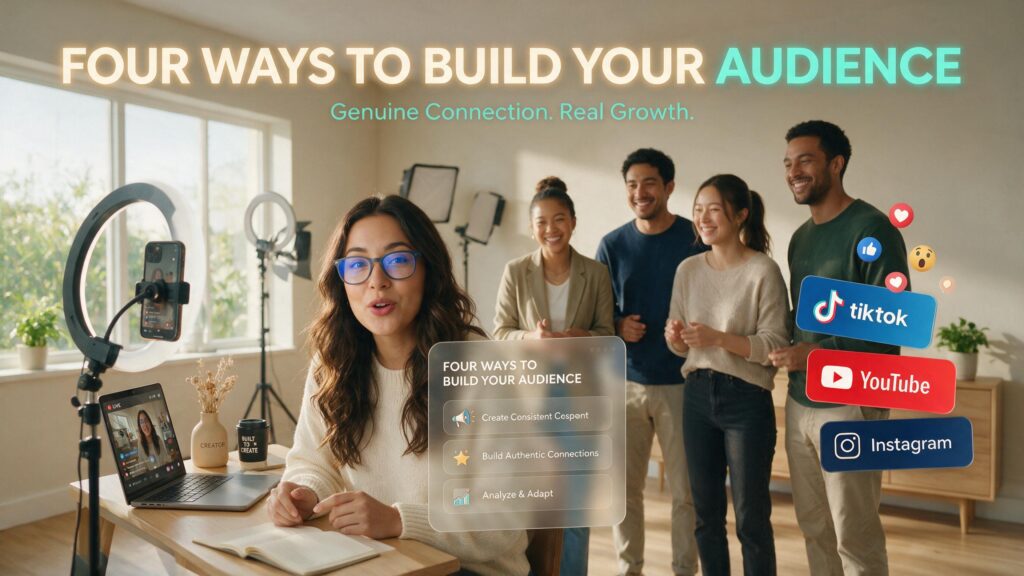
Clients often ask us how to build their audience. The key is to engage your readers and become a real person. If you want your audience to pay attention, you need to earn it. That was true in 2018, and it is even more important today. AI generated content now floods almost every digital feed. AI Overviews can also answer questions before users click a link. Social algorithms often show posts to only a small portion of your followers.
As a result, earning attention has become much harder. Google’s AI Mode now reaches roughly 2.5 billion people each month. Traditional organic search click through rates have also fallen on informational queries. Some studies show major declines when an AI Overview appears. For example, the top ranking page can fall from 7.3% to 1.6%. In other words, simply showing up is no longer enough. Your content must be worth citing, following, and remembering. Here are four ways to improve your viewership. These strategies reflect how audiences actually behave today.
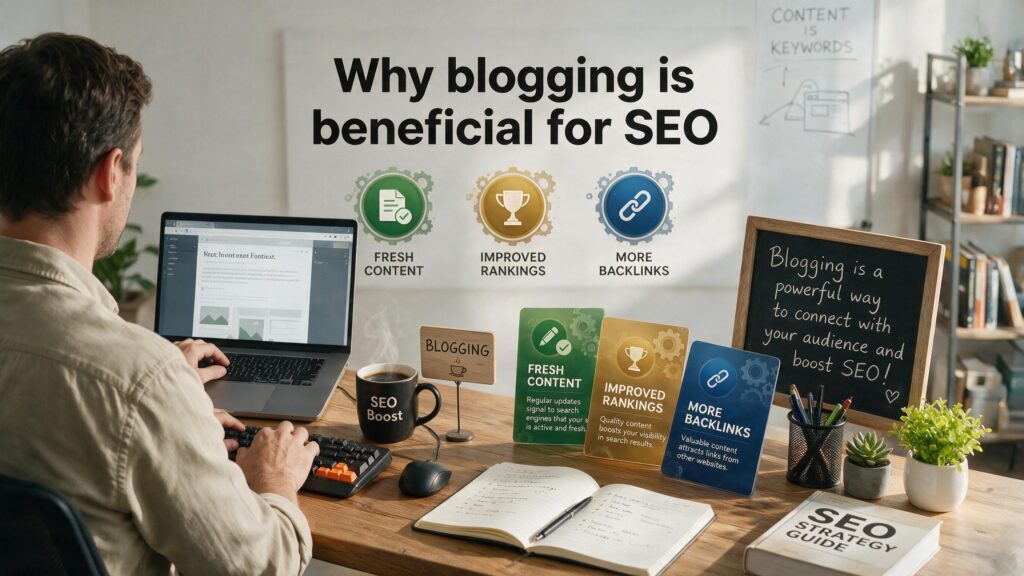
You must not only post here when you have a new client or something new to sell, but you must make a blog that can grab people’s attention by giving entertaining and useful material regularly. That fundamental hasn’t changed, but the bar for “regularly” and “useful” has.The average blog post contains about 1,400-1,430 words. Posts exceeding 3,000 words can earn significantly more backlinks. They can also generate more social shares than shorter posts.
A single well optimized post can generate traffic and leads for years. On average, its impact can last about 3.5 years. Businesses with active blogs also generate more leads and website traffic. They produce about 67% more leads than businesses without blogs. They also receive roughly 55% more website traffic. Nearly eight in ten content marketers now maintain active blogs. This means competition for audience attention is stronger than ever. More than seven million blog posts are published every day.
Borrow someone else’s audience

Write high quality guest posts for famous blogs in your niche and get yourself on the radar so people want to reach out to you. This could potentially get you hundreds of new subscribers without trying that hard. That tactic still works, but the mechanics have shifted meaningfully. Guest posting remains widely used, but only about 16-18% of SEO professionals now rank it as their single most effective tactic.
Digital PR has now become a major authority building strategy. Nearly half of SEO professionals rate it highly for earning organic media coverage. Digital PR uses newsworthy data, stories, and expert commentary to attract attention. It can also earn coverage from journalists and high authority publications. Some industry reports place it well ahead of traditional guest posting. Digital PR campaigns can earn links from more than 40 unique domains.These links can also come from higher-authority websites than typical guest posts. Campaigns can produce measurable results within six months. Initial media placements can sometimes appear within two to three weeks.
There’s also a new reason this matters beyond rankings: a large scale Ahrefs study of 75,000 brands found that brand mentions, not just backlinks correlate roughly three times more strongly with AI search visibility than traditional links alone. That means a respected publication can do more than send referral traffic your way. When a reputable publication quotes or mentions your brand, it can also increase the chances that ChatGPT, Perplexity or Google’s AI Overviews will mention your brand by name when someone asks a relevant question.
The smartest version of this strategy blends both approaches: guest posts for targeted, niche relevant placements, and digital PR leading with original data, a strong opinion, or a genuinely newsworthy angle for broader authority and AI citation potential. Google no longer rewards the old volume based approach. Spam detection updates increasingly devalue mass guest post outreach to low authority sites, so focus on quality and relevance rather than quantity.
Circulate your content

Use social media platforms to circulate your content. Share other people’s content more than your own as it attracts more people’s attention. Ensure the content you are sharing is diverse, appealing to multiple audiences while still engaging with your subscribed readers. That advice holds up well, though the platforms themselves reward different behavior than they did in 2018. Organic reach has continued its long decline. Instagram, for example, now reaches fewer than 1 in 10 followers on average. However, these feed changes have also created new discovery opportunities. Short form video, Reels, and AI recommended feeds can reach more non followers. Platforms now prioritize saves and shares more than likes. Video content also generates roughly 2.5 times more engagement than static posts.
Post your content across a variety of platforms. Consider Facebook, Instagram, LinkedIn, TikTok, YouTube Shorts, and Pinterest. Pinterest increasingly uses AI to recommend content based on user behavior. It can also consider interests, moods, and upcoming events. Pinterest has also become an important e-commerce discovery channel. LinkedIn now emphasizes professional value and user engagement. A specific, well written post can outperform generic content. This can happen even when the creator has a small following. Get creative, but keep your content structured. AI powered social search now influences how people discover content. Use clear captions and descriptive on screen text. This helps viewers understand your content quickly. It also helps recommendation systems identify your topic and target audience.
FAQ
How long does it take to build an audience through blogging? Most brands see meaningful traction within three to six months of consistent publishing, and a single strong post can keep generating traffic and leads for an average of 3.5 years, so blogging is a compounding, long term investment rather than a quick win.
Is guest posting still worth doing? Yes, but as one tool among several rather than the primary strategy. It works best for targeted, niche relevant placements, while digital PR, earning coverage through newsworthy data and expert commentary, now delivers stronger authority and better performance in AI search results.
What’s the difference between SEO, AEO, and GEO? SEO focuses on ranking in traditional search results; AEO focuses on directly answering questions in featured snippets and zero click results; GEO focuses on being the source AI tools like ChatGPT and Google AI Overviews cite when generating answers. All three reward the same underlying thing: clear, genuinely useful, well structured content.
Do gated ebooks still work as lead magnets? They still convert, but at a much lower rate than newer formats, under 1% on average, versus 5%+ for interactive tools like quizzes, calculators, and personalized guides. If you’re relying on a single static PDF, it’s worth testing an interactive alternative.
How often should I post on social media to grow an audience? Current benchmarks point to roughly 5-7 posts per week across most platforms. Posting less than 3 times a week tends to hurt reach, while posting more than 10 times a week shows diminishing returns consistency matters more than sheer volume.
Does AI content hurt or help audience building? It depends entirely on how it’s used. AI drafting tools are now used by the vast majority of marketers and can speed up production significantly, but unedited AI content consistently underperforms human edited AI content in rankings and engagement. The advantage increasingly goes to brands who use AI for speed and reserve original experience, opinion, and data for what makes the content worth reading.
Conclusion
Building a real audience was never about broadcasting, it was about earning attention one genuine, useful piece of content at a time, and that hasn’t changed since we first wrote this guide. What has changed is the terrain: your readers now split their attention between blogs, short form video, AI chat assistants, and algorithm driven feeds that show your content to a shrinking share of the people who already follow you.
Winning attention today still requires the four original fundamentals. Create a genuinely useful blog and provide generous free content. Reach new audiences through smart PR and strategic guest placements. Then, distribute your content consistently across multiple platforms. However, two additional priorities now matter in an AI saturated content landscape. First, create original expertise that only your business can offer. Second, build a presence on platforms that readers and AI systems trust. Do these things consistently, and you can build lasting authority. You will not simply build an audience around today’s algorithms. You will create authority that compounds over time. Your content can earn citations and attention long after publication. If you need help creating a content plan, we can help. Reach out, and let’s build a strategy that fits your business.