
You did everything right or so you thought.
You built a website. You claimed your Google Business Profile. Maybe you even ran some Facebook ads. And still, when a potential customer asks ChatGPT for the best HVAC company in their city, or when Google’s AI Overview summarizes “top-rated family dentists near me,” your business isn’t mentioned. Not even close.
It feels like throwing a party and nobody shows up except your competitors are the ones getting all the drinks.
Here’s the uncomfortable truth: AI-powered search has fundamentally changed how local customers find and choose businesses. And most small business owners haven’t caught up yet. That’s not a criticism it’s an opportunity. Because the businesses that adapt now, while many competitors are still asleep at the wheel, are the ones that will dominate their local markets for the next decade.
This guide is going to show you exactly what’s happening, why it matters more than you might realize, and most importantly what you can do about it starting today.
The Ground Has Shifted Under Your Feet
Think about how you searched for things online five years ago. You typed a few words into Google, scanned a list of blue links, maybe checked a Yelp page or two. That process took effort. It required judgment.
Now? A growing number of your potential customers are simply asking an AI.
They’re typing full questions into Google and getting a synthesized AI Overview at the very top of the page before any links. They’re asking ChatGPT or Perplexity, “Who’s the best personal injury attorney in Denver?” and getting a confident, conversational answer. They’re using Siri and Alexa in ways that are increasingly powered by large language models.
Here’s what makes this different from traditional SEO: These AI systems don’t just rank your website. They decide whether to *mention you at all*. They pull from your reviews, your website content, your Google Business Profile, third-party directories, local news mentions, and dozens of other data signals then synthesize all of it into a single, confident recommendation.
If the data isn’t there, or if it’s inconsistent or thin, the AI simply skips you. You become invisible.
And invisible businesses don’t get phone calls.
Why This Matters More Than You Think
Let’s put real numbers behind this.
According to research from BrightEdge, AI-driven search features now influence over 40% of clicks on Google search results pages. Google’s own AI Overviews appear in roughly 15% of all searches a number that’s climbing fast. Meanwhile, tools like ChatGPT crossed 100 million weekly users in 2023, and a significant portion of those users are asking local, purchase-intent questions.
For a local business, the downstream impact is direct and painful:
- Fewer inbound calls. If AI doesn’t surface your phone number or recommend your business, those calls go to your competitor.
- Reduced foot traffic. Customers who trust an AI recommendation skip the research phase entirely. If you’re not in the answer, you’re not getting the visit.
- Weakened reputation perception. When a competitor appears repeatedly in AI results and you don’t, customers subconsciously assume they’re the authority in your market — even if your work is genuinely better.
- Lost revenue at scale. One missed recommendation per day might seem small. Multiply that across a year, across hundreds of searches in your city, and you’re looking at a significant chunk of business walking straight to someone else.
The businesses most at risk are those with outdated or incomplete online profiles, inconsistent business information across directories, thin website content, and few recent reviews. Sound familiar? You’re not alone — but you can fix it.
Your Action Plan: 4 Steps to Become Visible in AI Search
Step 1: Lock Down Your Business Data Everywhere It Exists
AI models don’t just read your website. They crawl the entire web and they’re particularly sensitive to consistency. If your phone number is listed differently on Yelp than it is on your website, or your address format changes between Google and Facebook, AI systems treat that as a signal of unreliability. And unreliable sources don’t make the cut.
Your immediate action items:
- Audit your NAP data (Name, Address, Phone Number) across every major platform: Google Business Profile, Yelp, Bing Places, Apple Maps, Facebook, Angi, Houzz, Healthgrades (for medical practices), Avvo (for attorneys), and any industry-specific directories.
- Fix every inconsistency. Even minor differences “St.” vs “Street,” or a missing suite number can cause problems.
- Use a tool like Moz Local, BrightLocal, or Yext to scan your listings at scale and identify where your data is wrong or missing.
Think of this as building the foundation. AI systems need to see consistent, corroborating signals from multiple sources before they trust a business enough to recommend it. Every directory that confirms your information is another vote of confidence.
Step 2: Transform Your Website Content Into an AI-Readable Authority Hub
Most local business websites are brochures. They list services, maybe show some photos, and drop in a contact form. That’s not enough anymore.
AI systems are looking for depth, specificity, and demonstrated expertise. They want to see that you genuinely know your field, serve your specific geography, and can answer the exact questions your customers are asking.
Here’s how to make your website content work harder:
-
Build detailed service pages for each specific service you offer. Don’t have one page called “Plumbing Services” create individual pages for water heater installation, drain cleaning, sewer line repair, and so on. Each page should answer the most common questions a customer has about that service.
-
Add a robust FAQ section to every service page. Think: “How long does a water heater installation take?” or “Does homeowner’s insurance cover sewer line damage?” These are exactly the kinds of questions AI pulls answers from.
-
Write location-specific content. A page optimized for “emergency plumber in Austin, TX” will serve you better than a generic services page. If you serve multiple cities or neighborhoods, create dedicated landing pages for each.
-
Publish helpful blog content regularly. Articles that answer real customer questions “What are the signs of a failing water heater?” or “How to know when you need a root canal vs. a filling” — build topical authority that AI systems recognize and reward.
-
Use clear, structured formatting. Use headers (H2s and H3s), bullet points, and short paragraphs. AI models find structured content significantly easier to parse and cite.
One often-overlooked element: Add an “About” page that’s genuinely detailed. Include how long you’ve been in business, your specific credentials or certifications, the communities you serve, and what makes your approach different. AI models use this kind of content to build a profile of your business.
Step 3: Build a Review Engine That Never Stops Running
Reviews are arguably the single most powerful signal for AI search visibility at the local level. When ChatGPT or Google’s AI is deciding which plumber in Phoenix to mention, businesses with hundreds of detailed, recent, positive reviews win. Every time.
But here’s what most business owners get wrong: They ask for reviews occasionally, sporadically, or not at all. You need a system.
Build your review engine:
-
Ask at the moment of peak satisfaction. The best time to request a review is right after a successful job — when the customer just expressed gratitude. That’s your window. Don’t wait a week and send an email. Ask in person, then follow up with a text or email containing a direct link to your Google review page.
-
Make it embarrassingly easy. Create a short, direct link to your Google review page using Google’s Place ID tool. Put that link in text messages, email signatures, business cards, and receipts. The fewer clicks required, the more reviews you’ll actually get.
-
Respond to every single review — positive and negative. AI systems read your responses too. A thoughtful, professional response to a negative review signals to both customers and AI that you’re an engaged, accountable business.
-
Focus on Google first, but don’t ignore Yelp, Facebook, and industry-specific platforms. More corroborating review signals across more platforms equals greater AI visibility.
-
Aim for recency. Fifty reviews from three years ago matter less than thirty reviews from the last six months. Prioritize keeping a steady stream of fresh reviews coming in.
Step 4: Earn Mentions and Links From Trusted Local Sources
Here’s something that surprises many local business owners: AI models like ChatGPT aren’t just reading your website. They were trained on a massive slice of the internet, including local news sites, industry publications, community blogs, and authoritative directories. If credible outside sources mention your business, that dramatically increases the likelihood of AI including you in responses.
This is sometimes called “digital PR” or “citation building” but think of it simply as getting your business mentioned in the right places.
Practical ways to earn local mentions:
-
Get featured in local news. Sponsor a local event, share expert commentary on a community issue in your field, or pitch a human-interest story about your business to a local newspaper or news website. Even a small mention on a .com news site is gold.
-
Join and participate in local business associations. Chambers of Commerce, BNI chapters, and industry associations often maintain member directories with backlinks. These carry real weight.
-
Partner with complementary local businesses. A roofing contractor might get a mention from a local real estate agent’s blog. A pediatric dentist might be referenced on a local parenting resource site. These cross-references are exactly the kind of signals AI systems trust.
-
Leverage HARO (Help a Reporter Out) or similar platforms. Journalists regularly need expert sources for local stories. When your name appears as an expert source in a reputable publication, that’s an extremely powerful credibility signal.
-
Submit to industry-specific authoritative directories. For attorneys: Avvo, Martindale-Hubbell. For medical practices: Healthgrades, Zocdoc, WebMD listings. For contractors: Angi, HomeAdvisor, Houzz. These platforms carry domain authority that AI systems recognize.
A Real-World Scenario: How One Dental Practice Turned Invisibility Into a Full Schedule
 Let’s make this concrete.
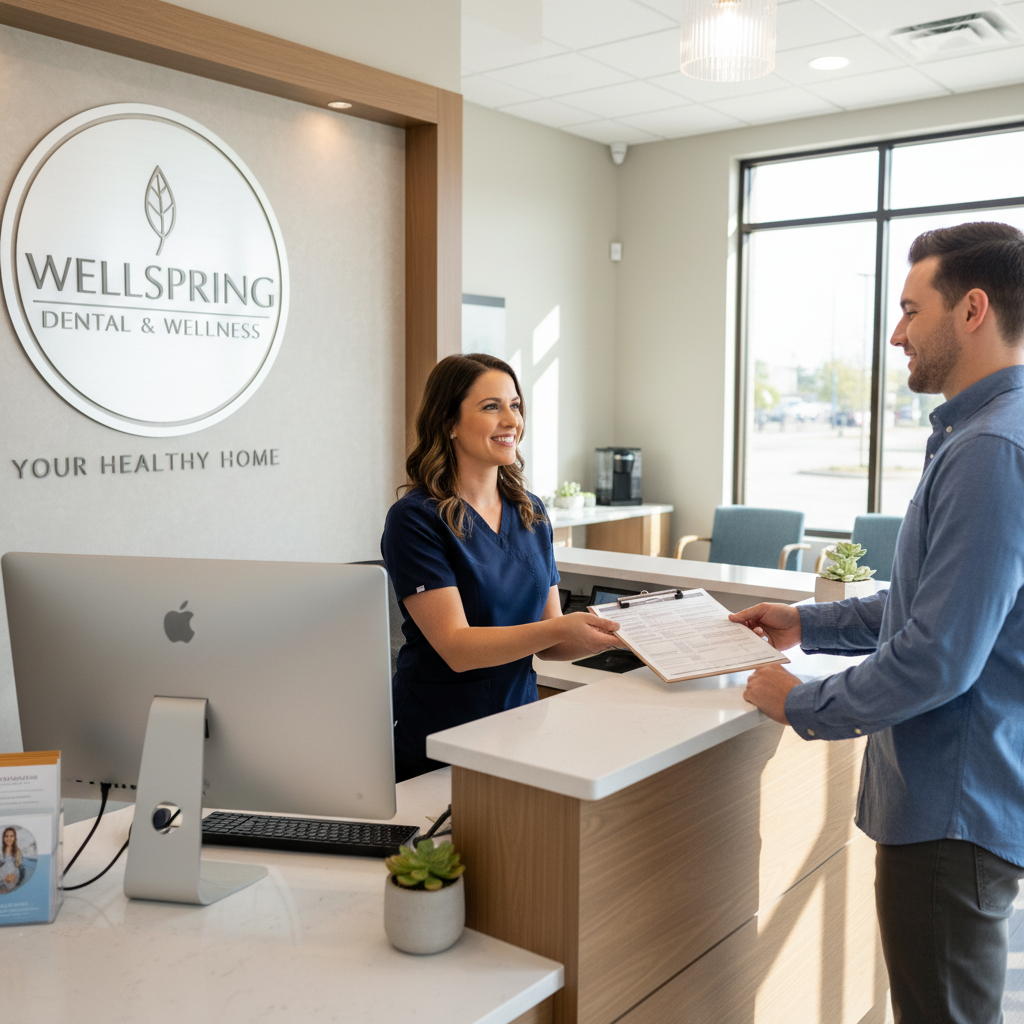
Imagine a family dental practice in suburban Charlotte, North Carolina — been open for eleven years, loyal patient base, genuinely excellent care. But when a new family moves into the neighborhood and asks Google’s AI Overview for “the best family dentist near Ballantyne,” the practice doesn’t appear. A newer competitor does. The front desk team starts noticing a dip in new patient calls.
Here’s what a strategic fix looks like in practice:
Month 1 — Data foundation. The practice audits all online listings and finds that their address has three different formats across six directories, and an old phone number is still live on two of them. Every listing is corrected and standardized. A professional Google Business Profile overhaul is completed with updated photos, complete service categories, and a detailed business description loaded with local and specialty keywords.
Month 2 — Content build-out. The website’s single “Services” page is expanded into twelve individual service pages cleanings, Invisalign, pediatric dentistry, dental implants, teeth whitening, and more each with an FAQ section answering the questions new patients actually Google. A blog is launched with two posts per month addressing topics like “What to do if your child is afraid of the dentist” and “How often do adults really need a dental cleaning?” A dedicated landing page is created for “family dentist Ballantyne Charlotte NC.”
Month 3 — Review activation. A simple text message review request is added to the checkout workflow, sent 30 minutes after each appointment. Within 90 days, the practice goes from 47 Google reviews to over 130, with an average rating of 4.8 stars. The team responds to every review within 24 hours.
Ongoing — PR and mentions. The lead dentist shares a quote in a Charlotte-area parenting blog about children’s oral health. The practice is listed in the Charlotte Chamber of Commerce directory. They sponsor a youth soccer team and earn a mention on the league’s website.
Six months later? When that same AI search runs for “best family dentist near Ballantyne,” the practice appears in Google’s AI Overview. New patient calls are up 34% year-over-year. The schedule is consistently full.
The work was real and required consistency. But none of it was mysterious just systematic execution of fundamentals, done well.
You Don’t Have to Stay Invisible
Here’s what it comes down to: AI isn’t replacing local business. It’s just raising the bar for which local businesses it notices. The good news is that the signals AI uses to make those decisions accurate listings, authoritative content, strong reviews, trusted mentions are all things you can influence. None of this is out of reach.
But it does take time, strategy, and ongoing attention. It’s not a one-time fix. It’s a set of systems that compound over time and build a business that AI search engines and the customers relying on them consistently trust and recommend.
If this feels like a lot to manage on top of actually running your business, that’s completely understandable. Most business owners find that the biggest gains come when they stop trying to figure it out alone and start working with people who live and breathe this every day.
Partnering with a local SEO agency that understands AI search optimization isn’t an expense it’s one of the highest-return investments your business can make right now. The right team will handle the technical groundwork, content strategy, review systems, and local PR so you can stay focused on serving your customers.
Don’t wait for your competitors to figure this out first.
Reach out to a qualified local SEO professional team today and get a clear picture of where your brand stands in AI search and exactly what it’ll take to get you seen.
Case Study: Helping Healthcare Brands Become Visible in AI-Powered Search
Our SEO agency Denver Digital has helped several healthcare businesses improve their visibility across both traditional search engines and emerging AI-driven search experiences.
One success story involved Abraham Dental Art, a full-service cosmetic dentistry laboratory serving dental clinics nationwide while also operating its own pharmacy – abrahamdentalart.com. We developed a comprehensive SEO and content strategy that strengthened topical authority and increased organic visibility for both service and product-related searches.
We also partnered with a Home Health Care Agency in New Jersey – reliablehealthcareagency.com, optimizing local SEO, service pages, and trust signals to improve rankings for high-intent healthcare queries and increase qualified leads.
Another project focused on a Family Dentistry practice in Michigan that offers its own pharmaceutical products – drdanadental.com. By enhancing content relevance, structured data, and entity optimization, we improved discoverability across search engines and AI-generated search results.
Additionally, we worked with a healthcare-focused blog covering health, wellness, and beauty topics – https://healthforeverplus.com/, building topical authority through strategic content clusters and expert-led articles. This resulted in stronger search visibility and increased recognition as a trusted information source.
These examples demonstrate how a well-executed SEO strategy can help healthcare brands become more visible in the age of AI search.

Pingback: Why Local SEO is the Secret Weapon for Regional US Franchises - The Most Interesting Blog In Advertising